

BioMath Core
Where health data becomes daily clarity.
One Human = One Living Model
A single continuous model of one person — not fragmented profiles reset by each service.
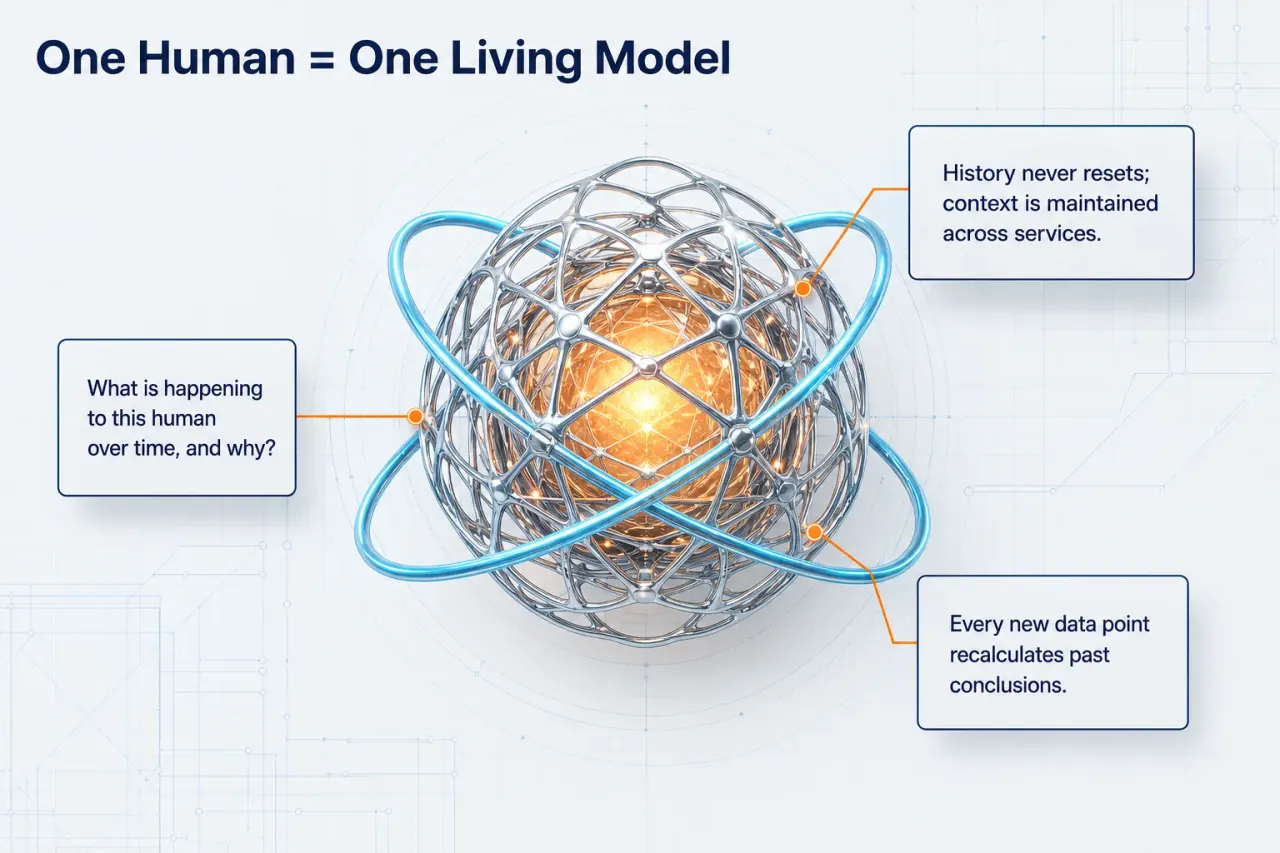
- What is happening to this human over time, and why?
- History never resets; context is maintained across services.
- Every new data point recalculates past conclusions.
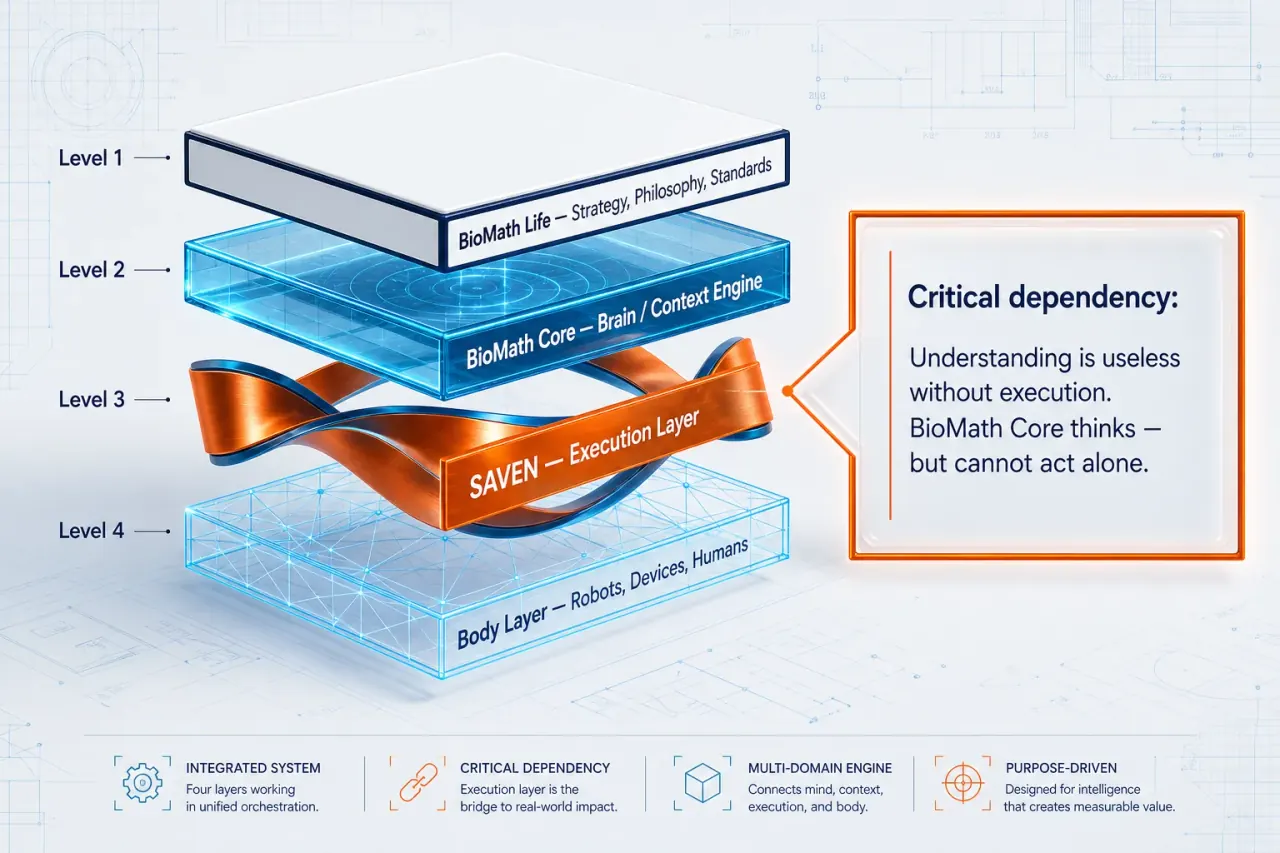
Four-layer stack
From philosophy to connected physical systems — one governed architecture path. BioMath Core provides specialized analysis and reports; the Human Data Model remains the broader structured representation of Human Data.
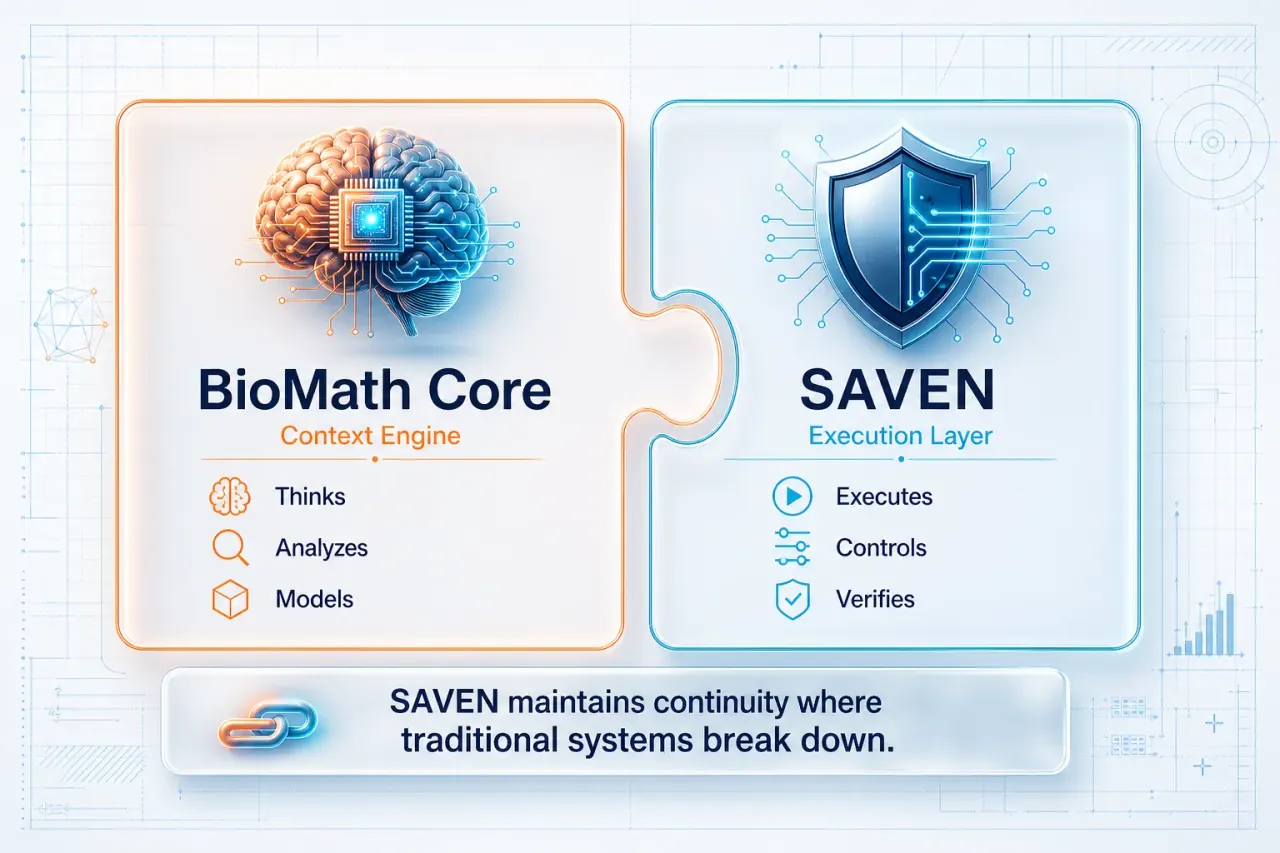
Context and orchestration — dual roles
Two interlocking capabilities in the care-related architecture. Neither replaces the other; both are required for continuous care design. This does not redefine every SAVEN application as healthcare.
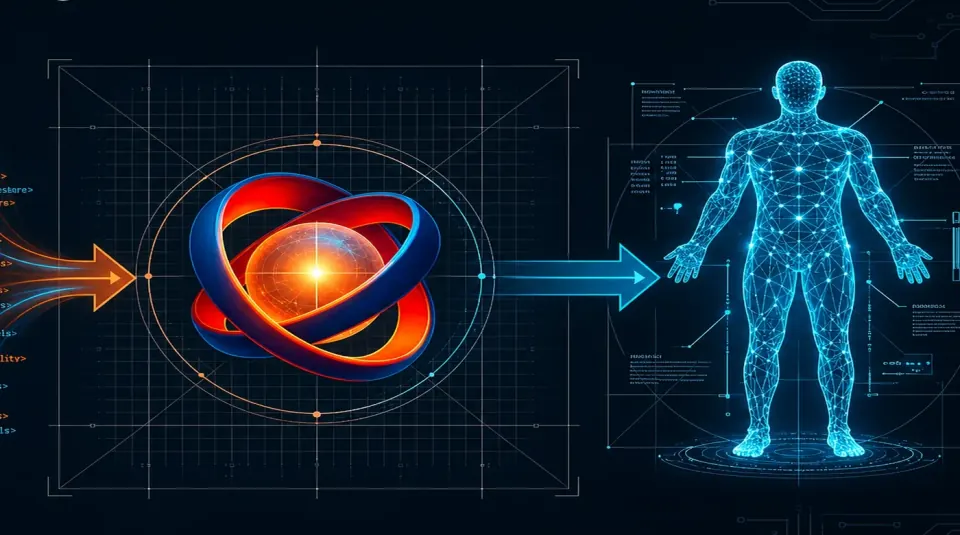
Engine — three simulation phases
Authorized signals enter the core, recalculate the living model, and return structured simulation context — Architecture only, not a live clinical engine.
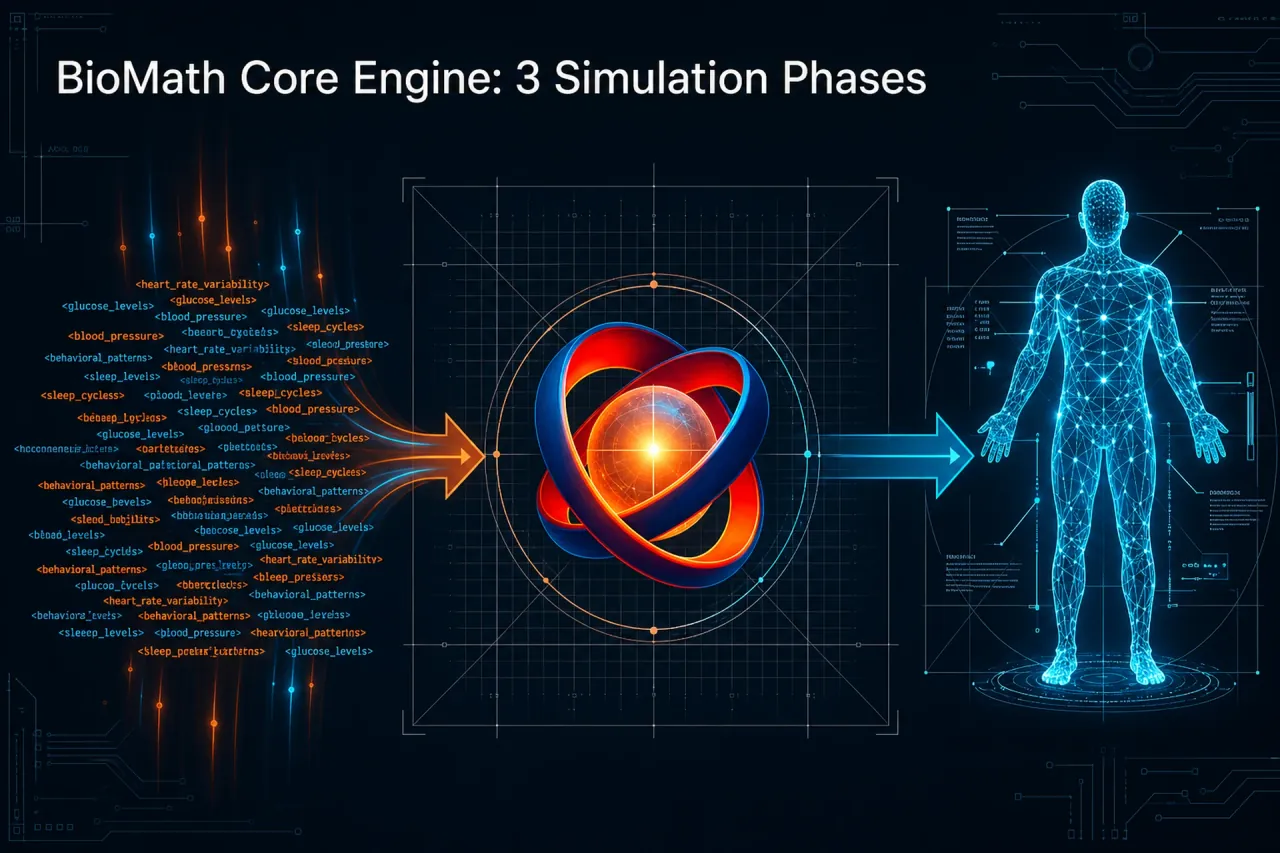
- Input — Authorized biometric, behavioral, and history signals enter as structured context — not raw unstructured dumps.
- Core — BioMath Core recalculates the living model across categories, history, and cross-domain structure.
- Output — Structured understanding that may inform SAVEN assistance architecture under human control, permissions, and system limits — not automatic commands to robots.
The Second Opinion
Every new signal is read two ways in parallel — local service logic and full-model systemic check — then unified into a verified result. This is architecture for how the system is intended to think, not a clinical product claim.
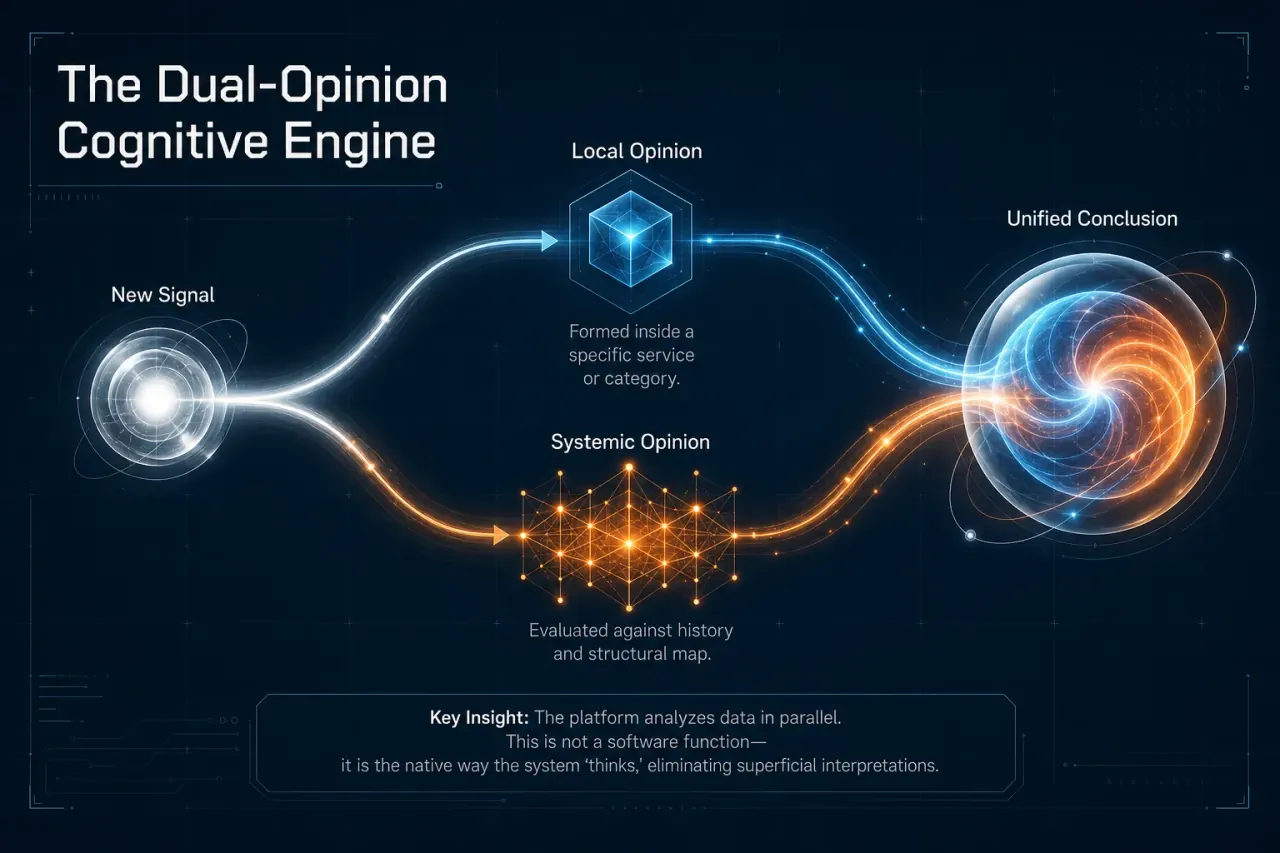
- Local Opinion — Formed inside a specific service or category — direct specialized logic (Model A / direct analysis).
- Systemic Opinion — Evaluated against history, cross-category influences, and the established structural map (Model B / structural validation).
Key insight: the platform is intended to analyze in parallel. This is not a cosmetic software feature — it is the native way the architecture thinks, reducing shallow single-path interpretations.
The Black Box Architecture
What looks like a closed box is designed to hold living intelligence and protective control — including technical approaches for storing personal and sensitive personal information. This describes architecture intent, not Operational security guarantees.

- Intelligence — Living network of context, categories, and recalculation across the human model.
- Security — Permissioned boundaries, verification, and protective control around sensitive human context.
Sensitive personal data — intended storage approach
Inside the Black Box concept, personal information and sensitive personal information are treated as technical data-storage problems — not as open marketing databases. The goal is to keep human context usable for care continuity while limiting who can reach it, what is kept, and why.
The architecture is designed around privacy, controlled access, data minimization, safety, traceability, and human oversight. Protection targets include encryption for data at rest and in transit, permissioned roles, separation of sensitive material from broader system surfaces, and purpose limitation — keep only what a clear purpose requires. These are design targets for the architecture; they are not claims of a certified live production vault, regulatory approval, or zero risk.
Architecture intent — not Operational guarantees
- StorageTechnical stores for personal and sensitive personal data, governed inside the Black Box concept — not unrestricted collection.
- AccessPermissioned roles and controlled pathways; sensitive context is not open by default.
- Encryption postureDesigned so sensitive material is protected while stored and while moving between trusted components — architecture intent, not a live certification claim.
- IsolationSeparate sensitive context from broader surfaces where practical; protective boundaries around the Black Box volume.
- MinimizationKeep only what the stated purpose requires; avoid retaining excess human detail.
Architecture intent connects to published site policies. These links explain commitments and limits — they are not certifications, Operational vault claims, or new legal text.
What BioMath Core is not
Boundaries that match the home clarity statement and category disclaimers.
- Not a live storefront or e-commerce catalog.
- Not medical advice.
- Not an Operational commercial service list.
- It does not diagnose conditions, prescribe, or sell medicines.
Output: Structured Understanding
BioMath Core is intended to return structured understanding — not generic advice. Five output pillars describe the architecture target.
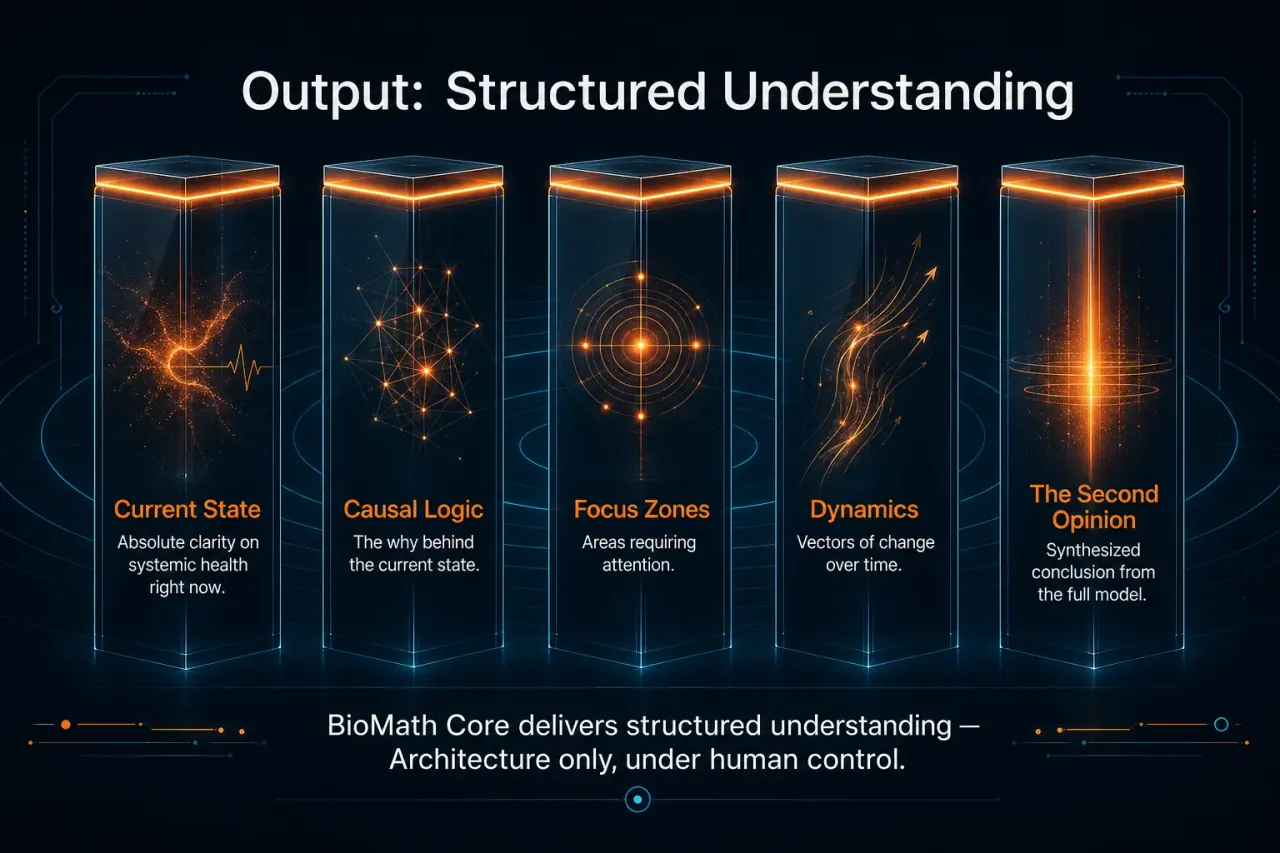
- Current State — Absolute clarity on systemic health right now.
- Causal Logic — The why behind the current state, traced through the network.
- Focus Zones — Pinpointed areas requiring immediate cognitive or physical attention.
- Dynamics — Visualized vectors of change over time.
- The Second Opinion — A synthesized, unbiased conclusion generated by the entire system.
Master Infrastructure Formula
Care-related architecture equation — BioMath Core analysis, SAVEN orchestration, and connected physical embodiments. Human Care applications are a primary direction; they do not redefine every SAVEN application as healthcare.
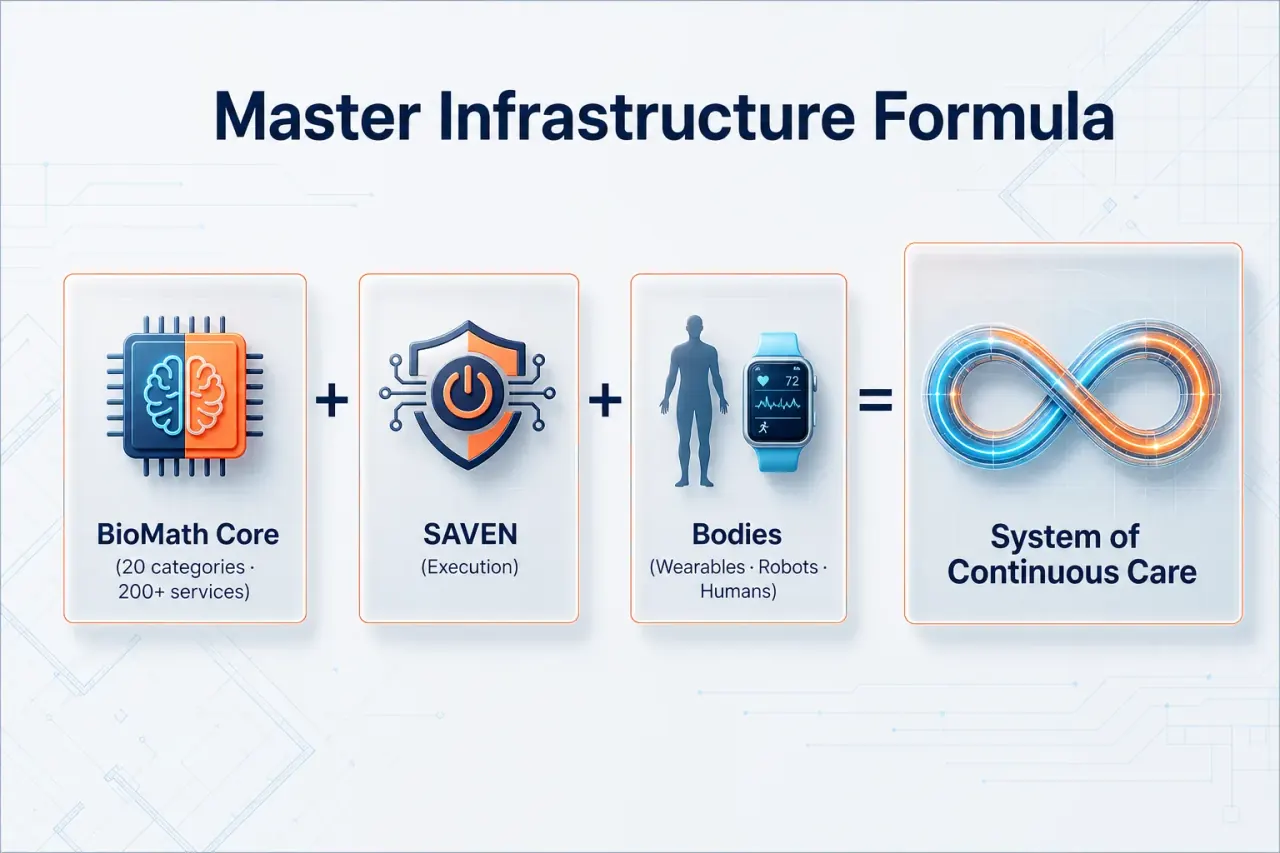
BioMath Core (20 categories · 200+ services)SAVEN (Orchestration)Bodies (Wearables · Robots · Devices · Humans)System of Continuous Care
Intended care-related architecture for ongoing assistance under human control — not an Operational product claim, and not a description of every SAVEN application domain.
Environments
Home, hospital, and institution share one helix of context, execution, and verification.
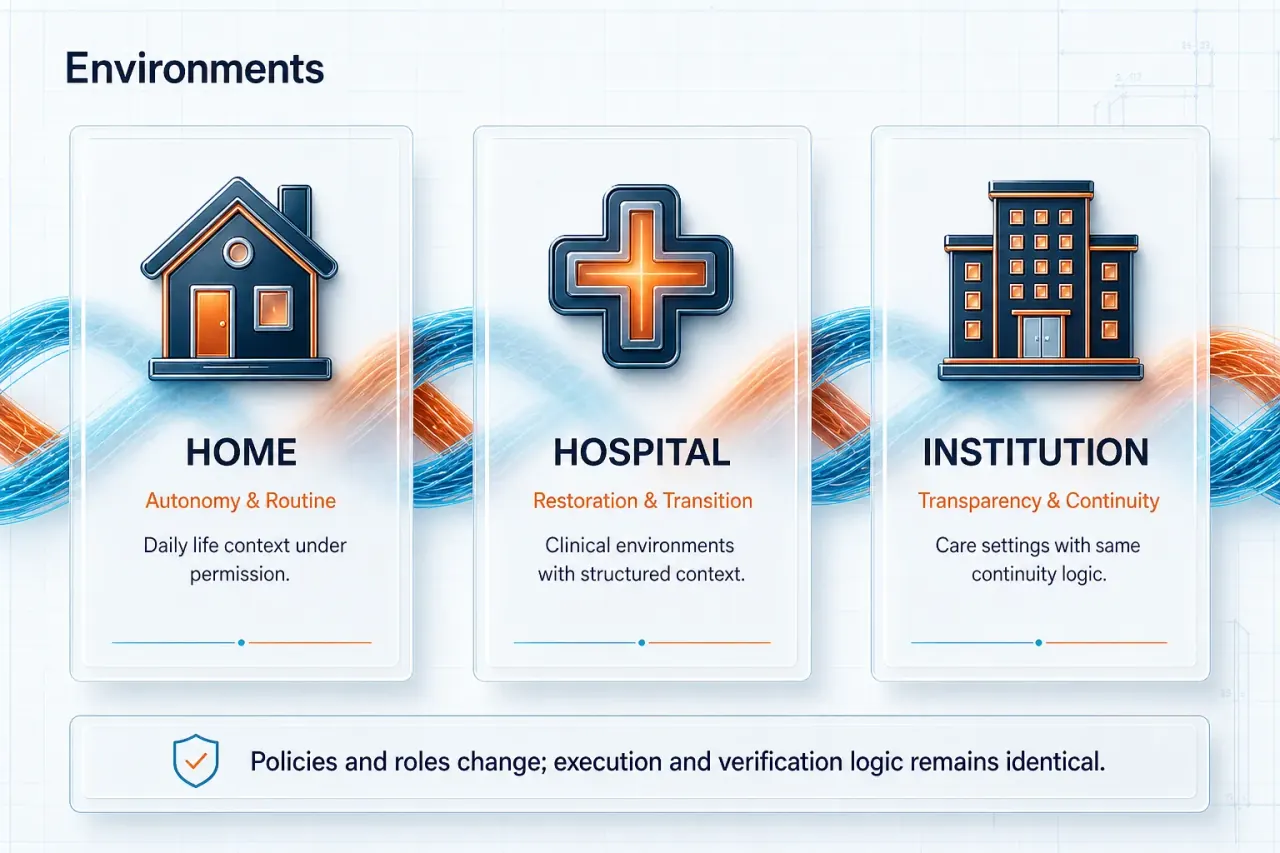
- Home — Daily life context — routines, devices, and family support under permission.
- Hospital — Clinical environments where structured context informs assistance architecture.
- Institution — Care and organizational settings that still require the same continuity logic.
Foundation sequence
One continuous path — not unrelated projects. BioMath Core sits at the intelligence layer.
BioMath Core → SAVEN
Reports inform SAVEN assistance
BioMath Core reports and conclusions may provide relevant context for SAVEN assistance architecture — under human control, permissions, and system limits. Physical action depends on the connected robotic or device system. Reports do not diagnose conditions, prescribe, or sell medicines.
Model coverage: 20 categories · 200+ services — not an Operational catalog.
Complete Services Catalog
Explore 200+ biomathematical health services across 20 specialized categories.
BioMath Services — 20 categories · 200+ services
More than 200 services under 20 categories — model coverage, not a live e-commerce storefront or Operational commercial catalog. Themeable category panels below.
- Critical HealthHealth-context modeling and risk assessment for serious conditions — architecture scope, not a clinical product
- Everyday WellnessDaily health optimization and wellness practices
- Longevity & Anti-AgingAging-science context for long-horizon human modeling
- Mental WellnessPsychological health and cognitive optimization
- Fitness & PerformanceAthletic training and physical optimization
- Women's HealthSpecialized healthcare for women
- Men's HealthSpecialized healthcare for men
- Beauty & SkincareDermatological health and cosmetic optimization
- Nutrition & DietNutrition and dietary context for authorized human modeling
- Sleep & RecoverySleep and recovery context for daily human modeling
- Environmental HealthEnvironmental context for authorized human modeling
- Family HealthFamily-context modeling across related human profiles
- Preventive Medicine & LongevityPreventive-health context and long-horizon wellness modeling
- Biohacking & PerformancePerformance-context modeling for authorized human data
- Senior CareAging and care-context modeling for older adults
- Eye-Health SuiteVisual-health context for authorized human modeling
- Digital Therapeutics StoreModeled digital-health intervention categories — not a live therapeutics storefront
- General Sexual LongevityComprehensive sexual health and wellness optimization
- Men's Sexual HealthSpecialized sexual wellness for men
- Women's Sexual HealthSpecialized sexual wellness for women
Category cards describe intended model coverage. They are not an Operational storefront, not a claim of live AI-powered services, and not medical advice. They do not diagnose, prescribe, or sell medicines.
Continue exploring
Human Data, Purpose, Technology, Trust, and FAQ deepen the same foundation story.
- Human DataWhat human context may mean under permission
- Human Data ModelHow authorized context is organized
- PurposeWhy SAVEN Core exists
- TechnologyDisciplines that support the architecture
- FoundationFull foundation sequence hub
- Trust · PrivacyPrivacy commitments and limits
- Trust · SecuritySecurity governance and reporting
- FAQBioMath Core questions and answers
BioMath Core pages describe intended architecture. They do not imply commercial deployment, clinical use, diagnosis, prescribing, or selling medicines.